DECEPLINE
FOCUS
STRENGTH
Taekwondo is a Korean martial art that combines powerful physical training with mental discipline and character development. Recognized worldwide and practiced by millions of athletes, it is also an official Olympic sport known for its dynamic kicking techniques, structured training system, and strong philosophical foundation.
Taekwondo
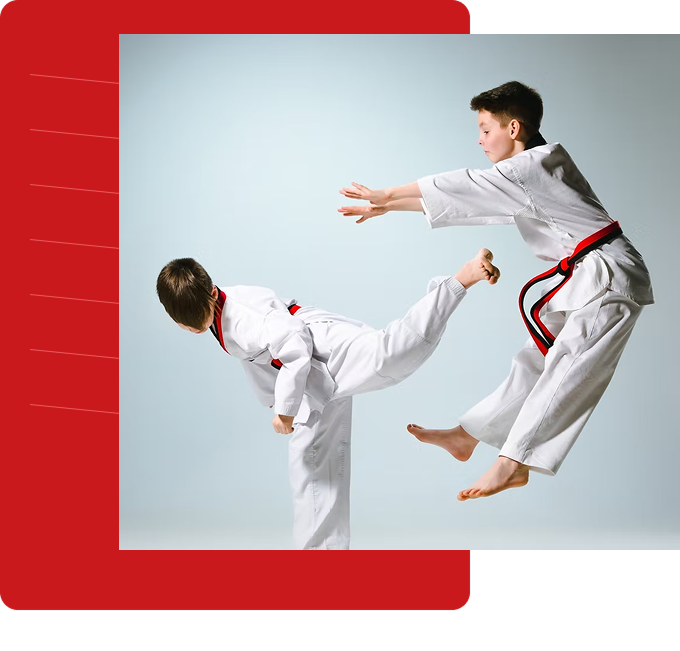
Taekwondo is a Korean martial art that combines powerful physical training with mental discipline and character development. Recognized worldwide and practiced by millions of athletes, it is also an official Olympic sport known for its dynamic kicking techniques, structured training system, and strong philosophical foundation.
At Master Reza Taekwondo Academy, Taekwondo is more than a sport. It is a structured pathway for personal growth. Through consistent training, students learn not only techniques, but also discipline, focus, resilience, and respect. Our program integrates traditional martial arts values with modern training methods to help students grow physically, mentally, emotionally, and socially.
Taekwondo provides a clear progression system through belt ranks, which allows students to set goals, stay motivated, and experience measurable achievement over time. Whether a student trains for personal development, fitness, or competitive goals, the Taekwondo program offers a meaningful and structured journey.
Frequently asked questions
Who Is This Program For?
The Taekwondo program is designed for students of different ages and experience levels,
including:
Children who want to build confidence, focus, and discipline
Youth seeking structured physical activity and character development
Adults interested in traditional martial arts training and fitness
Individuals who want to pursue long-term martial arts progression and potentially earn a black belt
Our classes are structured so beginners feel supported while more experienced students continue
to grow and refine their skills.
Class Structure
Each Taekwondo class follows a structured format designed to promote safe learning and steady progress:
Warm-up and mobility exercises
Technical skill development and kicking drills
Forms (Poomsae) practice
Partner drills and controlled applications
Conditioning exercises and cool-down
This consistent structure helps students improve gradually while maintaining a safe and motivating environment.
Our Coaching Advantage
Our Taekwondo program is guided by qualified instructors who combine technical expertise with strong personal leadership. All of our coaches understand the deeper philosophy behind martial arts training and emphasize discipline, self-awareness, and positive energy in every class.
Because our instructors maintain physical, mental, and emotional balance in their own lives, they are able to guide students toward the same harmony. Their role extends beyond teaching techniques; they serve as mentors who help students develop confidence, resilience, and respect for others.
Progress & Measurable Development
Progress in our academy is intentional and measurable. When students begin training, their initial assessment establishes a baseline. After approximately three to six months of consistent training, we reassess the student and compare their progress with their starting point.
Families and students can clearly observe improvements in areas such as:
Physical strength, balance, and coordination
Mental focus and discipline
Emotional confidence and resilience
Social interaction and teamwork
Overall personal development
This measurable growth helps students stay motivated and allows families to see the meaningful impact of training.
Our Comprehensive Assessment Approach
Every student who joins the academy begins with an initial assessment. This evaluation helps us understand the student’s starting point and allows us to design an appropriate training pathway.
The assessment may consider:
Physical ability and movement quality
Flexibility, coordination, and strength levels
Mental focus and attention capacity
Emotional readiness and confidence
Behavioral patterns and training habits
Sleep and recovery factors when relevant
By understanding these aspects of each individual, we can guide them more effectively and ensure their training experience supports balanced development.
Physical Benefits
training improves overall physical performance
Mental Benefits
training improves overall physical performance
Spiritual Benefits
training improves overall physical performance
Social Benefits
training improves overall physical performance
Emotional Benefits
training improves overall physical performance